
People no longer visit a city only for its cathedral, museum, or Saturday market. They also discover it through a brewing tank, a tasting room, a terrace where malt is discussed like a landscape, and a neighborhood brought back to life because a small brewery attracts visitors. Beer tourism has evolved far beyond its original scale: it no longer appeals only to dedicated enthusiasts, but also to curious travelers, food lovers, families on weekend trips, and visitors seeking a tangible local identity.
In this movement, breweries have become much more than production sites. They serve as gateways to a region, its heritage, flavors, artisans, and stories. When a festival fills the streets, when a beer route shapes an entire weekend itinerary, or when a microbrewery opens a visitor space, a complete economic ecosystem begins to move. Hotels receive bookings, restaurants redesign their menus, specialty shops benefit from increased foot traffic, and the local economy grows stronger around an experience that combines pleasure, culture, and human connection.
In Brief 🍺
🍻 Beer tourism boosts brewery sales, but also benefits cafés, hotels, transport services, and nearby local businesses.
🏨 Visitors extend their stays through food and beer pairings, guided tours, and heritage discoveries.
🎉 Festivals act as economic accelerators with direct financial impact, temporary jobs, and strong regional visibility.
🤝 Themed tourism routes bring together brewers, artisans, local producers, and tourism offices around a coherent and sustainable offer.
📱 Social media, QR codes, digital ticketing, and immersive experiences strengthen the attractiveness of beer tourism.
🌿 Eco-responsibility improves both the image of events and their integration into the local economy.
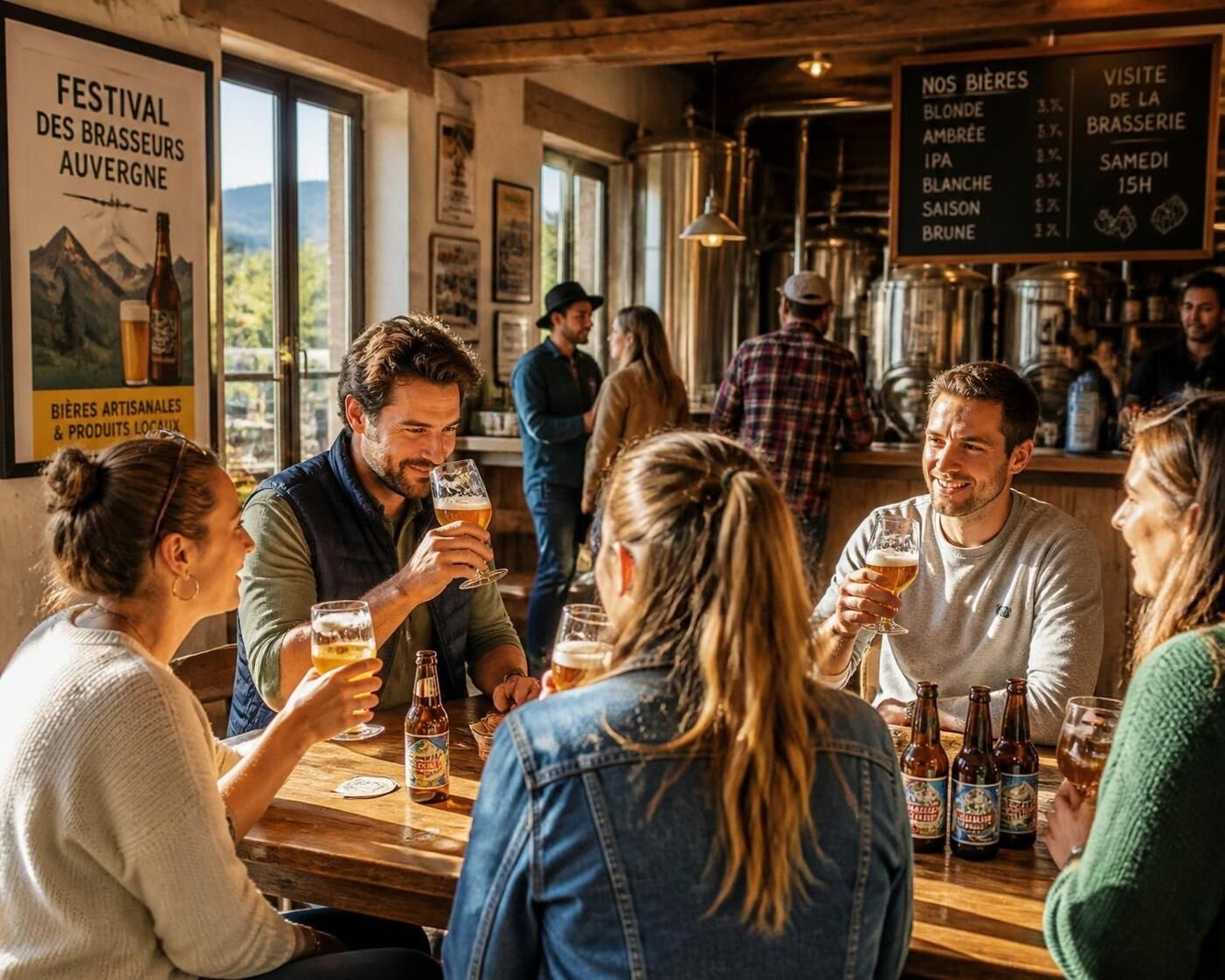
Economic Dynamics of Beer Tourism: A Growth Engine for Local Breweries
Beer tourism acts as a value revealer. A visitor walking into a brewery does not simply pay for a tasting: they may buy takeaway bottles, reserve a table, stay overnight, explore the historic center, and leave with local specialties. This chain of spending creates an immediate ripple effect throughout the local economy.
Small breweries benefit enormously from this model. Many improve their profit margins through direct sales, which are far more profitable than traditional distribution channels. In some regions, opening a visitor area or a retail shop has even helped stabilize what used to be highly seasonal activity. Beer tourism is therefore not a side attraction — it is a commercial, cultural, and territorial extension of the brewer’s profession.
The Impact of Visitors on Local Businesses and Hospitality
When a beer route functions well, it redistributes visitor traffic across the entire economic fabric. Bakeries create malt-based breads, wine shops design dedicated displays, taxis and ride-share services benefit from tasting evenings, and hotels receive bookings outside their traditional peak periods. This is why local authorities closely monitor beer tourism.
In medium-sized towns, a single themed event can fill rooms that would otherwise remain empty during the low season. This presence supports not only accommodation providers but also nearby businesses. In Béthune, for example, the promotion of brewing culture demonstrated how a niche activity could benefit a wide variety of services. The real economic signal is clear: beer attracts visitors, then the territory keeps them. 🍺
Longer Tourist Stays Through Culinary and Cultural Experiences
Today’s traveler wants to experience something, not simply consume. A brewery tour followed by a pairing between amber beer and regional cheese can easily transform a short stop into a full weekend getaway. By combining gastronomy, industrial history, and heritage discovery, beer tourism naturally increases the average length of stays.
This dynamic strongly benefits restaurants working with local products. A top-fermented beer served with artisanal terrine or a grain-based dessert tells the story of a territory with remarkable precision. Visitors remember this coherence. It is also what differentiates strong destinations: they are not just selling a drink, but creating a complete cultural experience.
Beer Festivals and Brewery Routes: Essential Drivers of Economic Vitality
Festivals concentrate in just a few days the kind of visibility that would otherwise be difficult to achieve. They create landmark events, give breweries a collective identity, and attract audiences who might never have planned an isolated brewery visit. Beer routes, meanwhile, extend visitor traffic over time and distribute benefits across several municipalities.
The combination is remarkably effective. Festivals act as sparks, while brewery circuits provide long-term anchoring. Beer tourism reaches a new level of maturity, especially when local stakeholders coordinate their communication and offer shared passes, shuttle systems, or tasting cards. A territory that intelligently connects its different stops does far more than entertain — it builds an industry.
| Indicator 📊 | Observed Effect 🍻 | Territorial Impact 🏘️ |
|---|---|---|
| Brewery visits | Increased direct sales | Better local revenue distribution |
| Festivals | Visitor peaks | Hotels and restaurants boosted |
| Thematic routes | Longer stays | Stronger local economy |
Concrete Examples and Data Illustrating the Growth of Local Breweries
The numbers add real substance to this phenomenon. In several European brewing regions, certain events welcome tens of thousands of people during long weekends. Even with conservative spending estimates, the economic impact quickly reaches several hundred thousand euros — or even more when accommodation, dining, and additional purchases are included. Beer tourism is no longer a marginal activity.
For microbreweries, growth is not only visible through sales volume. It can also be seen through investments: expanding taprooms, hiring guides, building terraces, implementing ticketing systems, or opening retail shops. Many breweries are evolving toward hybrid business models combining production, hospitality, and direct sales. This is where the real rise of the industry becomes visible.
Major Financial Benefits of Popular Beer Festivals
Large beer festivals attract broad audiences because they combine tastings, music, gastronomy, and a spirit of discovery. On the ground, this means hotel queues, packed terraces, and exhibitors selling large portions of their promotional stock. Beer tourism therefore creates concentrated revenue streams that help small breweries secure the rest of their business year.
Events such as the Lyon Beer Festival or the Brussels Beer Challenge also generate strong image value. They attract not only visitors but also distributors, journalists, influencers, and buyers. Winning a medal or standing out at one of these events can increase orders for months afterward. In this context, festivals are not just festive gatherings — they are economic platforms.
Creation of Temporary Jobs in Hospitality, Catering, and Accommodation
A properly scaled event quickly mobilizes dozens of jobs. Reception hosts, servers, security agents, guides, drivers, dishwashers, sound technicians, and cleaning staff all become essential. For many students or seasonal workers, these festivals even serve as gateways into hospitality or event management. 👥
The benefits extend beyond the weekend itself. When beer tourism becomes established, some positions turn permanent: visitor managers, community managers, workshop hosts, partnership coordinators. This transformation is essential for local economies because it keeps skills and value within the territory instead of allowing them to flow toward larger outside operators.
Case Study: Gambrinus Fest and Its Tourism Impact
Gambrinus Fest perfectly illustrates this mechanism. By bringing together producers, local audiences, and visitors from other regions, the event acts as a territorial showcase. Accommodation bookings increase, restaurants extend their opening hours, and shop owners adjust their inventories to benefit from the increased flow. For a few days, the brewing sector becomes a true tourism center of gravity.
This type of event also demonstrates beer tourism’s storytelling power. Between tastings, meetings with brewers, and the promotion of regional heritage, the festival goes beyond commercial entertainment. It becomes a collective narrative — almost a territorial signature. And when visitors return year after year, the event stops being just another gathering and becomes a genuine regional asset.
Local Synergies and Thematic Tourism Routes to Sustain Microbreweries
The sustainability of small breweries depends on more than the quality of their beer. It also relies on their ability to integrate into a shared tourism offer. An isolated microbrewery attracts motivated enthusiasts; a network of complementary venues attracts a much broader audience. Beer tourism reaches its full potential when designed as a journey rather than a single address.
This explains the growing interest in thematic routes. They reassure visitors, structure the tourism offer, and encourage movement between towns. For breweries, this means increased visibility, shared promotional costs, and a more diversified customer base. The glass is no longer simply full — it overflows into the entire local ecosystem.
Collaboration Between Brewers, Artisans, and Local Authorities
The strongest dynamics rarely emerge alone. They rely on cooperation between producers, food artisans, accommodation providers, tourism offices, and local elected officials. When a municipality improves signage, when an artisan crafts furniture for a tasting room, or when a cheesemaker creates a dedicated pairing board, everyone benefits from the shared momentum. Beer tourism becomes an exercise in practical cooperation.
Promoting Regional Expertise and Know-How
A local beer becomes even more powerful when it interacts with its environment. Labels inspired by mining history, recipes using regional grains, or glassware produced by nearby workshops all reinforce uniqueness. Heritage here is not frozen decoration — it is living material that nourishes the identity of a place.
This showcase of craftsmanship also benefits other professions. Visitors who initially come for the beer discover ceramic artists, charcuterie makers, coffee roasters, and bakers. It creates a virtuous circle built on shared visibility and trust in local products.
Creating Immersive and Authentic Experiences
Why do some brewery experiences remain unforgettable? Because they allow visitors to see, smell, and truly understand. Participatory brewing sessions, aroma workshops with master brewers, or walks between hop fields and fermentation rooms are the moments that transform visits into lasting memories. Beer tourism succeeds when it engages both the senses and the intellect.
This immersion responds to a powerful demand for authenticity. In a world saturated with standardized experiences, small breweries have a clear advantage. Their human scale creates a rare sense of proximity — and that proximity is invaluable for their growth.
The Role of Tourism Offices in Organizing Beer Tourism Routes
Tourism offices are often the discreet conductors of the industry. They centralize information, coordinate calendars, design maps, facilitate partnerships, and make the tourism offer understandable for visitors. Without this coordination, many initiatives would remain invisible or fragmented.
Their role becomes even more strategic when they create territorial branding around brewing heritage. Some regions are even considering large-scale projects such as “Beer Cities” or beer heritage centers to give beer tourism a lasting political and cultural dimension. The industry then gains a backbone rather than remaining a simple collection of isolated events.
🍺 Multi-site tasting passes to simplify visits
🗺️ Clear maps including stops, parking, and shuttle services
🧀 Combined offers with restaurants and regional workshops
🏛️ Storytelling around industrial and gastronomic heritage
Innovation, Sustainability, and Heritage: The Keys to Beer Tourism Development
The sector continues growing because it successfully combines tradition with modern tools. Brewing tells an ancient story, but its promotion now relies on digital technologies, instant booking systems, short-form content, and immersive experiences. Beer tourism thrives when it embraces this dual identity: deeply rooted yet innovative.
Visitors want authenticity, but they also want simplicity. The ability to book a workshop online, scan a QR code to learn where the hops come from, or receive a personalized itinerary significantly improves the experience. This fluidity helps breweries convert curiosity into actual visits.
Digital Marketing Strategies to Increase Brewery and Event Visibility
Instagram, TikTok, geolocated newsletters, customer review campaigns, and mobile ticketing have become essential tools. A special beer release filmed at the right moment or a well-promoted announcement can dramatically increase attendance for an entire weekend. Interactive QR codes add valuable educational depth, especially when they explain recipes, ingredients, or local heritage connections.
Augmented reality is also finding its place within modern tourism routes. By pointing a smartphone at a brewing tank or an old industrial façade, visitors can discover archives, anecdotes, or production diagrams. This approach strengthens memorization while modernizing the image of beer tourism. To manage these evolving needs, some organizations draw inspiration from digital sourcing and recruitment methods similar to those used by trino recruitment or specialized rekrytering stockholm networks, where visibility, precise targeting, and efficient tools make the difference.
Eco-Friendly Initiatives Within Beer Festivals
The long-term success of festivals also depends on environmental responsibility. Recycling systems, short supply chains, reduced packaging, and reusable scenography all immediately reduce environmental impact. These actions also respond to growing public expectations for coherence between local identity and concrete sustainable practices. 🌿
For beer tourism, the challenge is twofold. Reducing waste protects hosting locations while strengthening the destination’s positive image. A well-executed ecological strategy can even become a decisive argument for visitors increasingly choosing activities according to responsible values.
Reusable Cups and the Promotion of Organic Beers
The use of reusable cups has become a simple, visible, and highly effective marker. It reduces waste volumes while improving deposit management systems. At the same time, highlighting organic beers or brews made with regional ingredients adds deeper meaning to the visitor experience. The most convincing festivals do not simply claim sustainability — they make it measurable.
This consistency also strengthens trust toward breweries. Visitors understand that the commitment is not merely marketing, but a genuine production and hospitality philosophy. In the long run, that trust becomes as valuable as any award medal.
Sustainable Partnerships With Committed Local Producers
Collaborations with farmers, breeders, bakers, or market gardeners help anchor festivals more deeply within their territory. Visitors no longer come only to drink; they come to discover an entire network of responsible practices. This is how beer festivals enrich a value chain extending far beyond the beverage itself.
These partnerships create a credible narrative around taste, terroir, and resource respect. Beer tourism gains additional depth, while local economies gain stability because value is shared among several long-term partners.
Cultural Transmission and the Promotion of Regional Gastronomic Heritage
At its core, the greatest strength of this industry lies in its cultural dimension. Festivals and brewery visits transmit techniques, family stories, gestures, and vocabularies that cannot be learned in supermarkets or behind screens. Brewing heritage is told through glasses, tanks, and shared meals.
This transmission naturally extends into regional gastronomy. Pairing rustic beer with slow-cooked dishes, reviving forgotten food pairings, or bringing local recipes back into the spotlight all make beer tourism a powerful territorial development tool. Travelers discover pleasure, producers gain recognition, and destinations build stronger, richer, and more memorable identities.
| Innovative Action 🚀 | Visitor Benefit 🙂 | Brewery Benefit 🍺 |
|---|---|---|
| Interactive QR codes | Fast and playful information | Better sales conversion |
| Digital ticketing | Simplified booking | Smoother visitor management |
| Eco-responsible systems | More coherent experience | Stronger brand image |